Food Science for Parents: 7 Proven Science-Backed Insights You Must Know
Food Science for Parents: 7 Proven Science-Backed Insights You Must Know

Why Food Science for Parents Matters
At 7:42 a.m, the toaster is beeping, the school bag is half-packed, and you are reminding your child (again) that shoes belong on their feet, not the couch.
You quickly threw some cereal and milk together for breakfast and felt slightly accomplished because the box said “whole grain.” Not even 10 minutes later, your child says they want a snack.
Seriously? “But you just ate! Why are you hungry?” This has nothing to do with being a “bad parent.” It’s simply basic biology, and this guide breaks down food science for parents in a simple, practical way
This is a typical day in your house. As a mother and a chemist, I’ve realized that it’s not bad parenting.
Food science is essential for understanding everyday food choices that parents make.
Most parents don’t realize how much of their daily routine can improve with just a little food science for parents explained in practical, real-life terms
Every bite of food that enters our body, no matter what it is, starts tiny chemical reactions that will affect your energy, mood, and focus. Once you realize this, food is no longer mysterious; it can start to function like a tool that makes sense through food science for everyday parents.
💬 Real-life mom example: I just made a small change of “cereal” to eggs and “toast”, and my son’s focus was still on his math worksheet at 10:30. The teacher even commented on the alertness that day.
This is one of the simplest examples of food science for parents directly affecting a child’s focus and morning behavior.
The good news? You don’t need lab coats and beakers to understand this food science. You can add simple principal concepts about how food works.
This is why understanding simple food science for parents can make everyday meals feel less chaotic and far more predictable.
“As a mom and scientist, I have created this guide to explain the real food science for parents in everyday meals.”
By time this short guide is over, you’ll understand:
- Why do some meals make you want to sleep?
- How does cooking change the nutrients?
- What snacks actually fuel your children?
- Easy swaps you can make to your families food that would work for you.
Each of these questions is rooted in the everyday food science for parents that rarely gets taught in a simple, clear way.
It’s time to stop guessing and start knowing, along with the real science that aligns with your real life.
- Why Food Science for Parents Matters
- 1. Food Chemistry 101 — The Simple Science Behind Your Plate
- 2. The Energy Rollercoaster – What Blood Sugar Does to Your Focus
- 3. Cooking and Chemistry — How Heat Changes Nutrients
- 4. The Hidden Chemistry of Kids’ Snacks
- 5. Practical Takeaways — Real Changes That Stick
- 6. Everyday Biohacks That Actually Work With Families
- 7. Science Made Simple for Real Life
- FAQs — Real Questions Parents Actually Ask
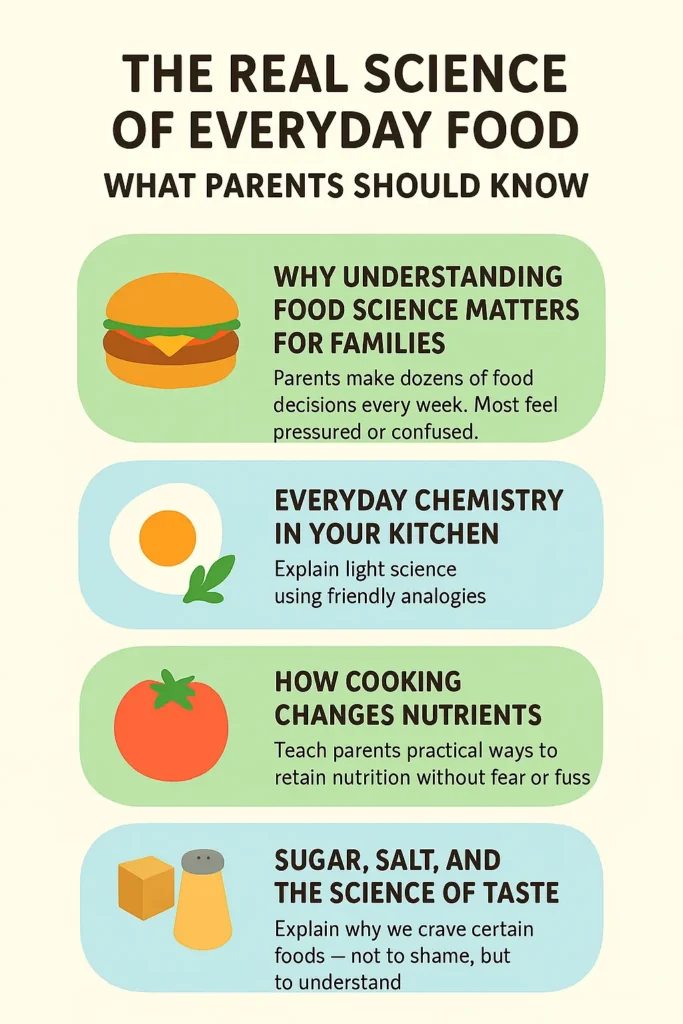
1. Food Chemistry 101 — The Simple Science Behind Your Plate
Food science might sound complex, but is really just how your body takes food and uses it for energy, focus, and calm.
This basic food science for parents helps decode why certain meals energize you while others drain you.
This is the foundation of food science of everyday food that parents often try to understand while running their busy routines.
When considering your body, think about it like a small but busy factory. When you go about your day, the factory is running thousands of reactions to keep you moving, thinking, and calm.
Food is just the raw material that keeps that factory running.
The three main ingredients – carbs, protein, and fats – are just like a team. This is where food science everyday food parents should start.
The “Big Three” and What They Actually Do
Carbs = Quick Energy
Your body likes carbs; they provide a quick source of fuel.
Carbs break down into glucose, which becomes your main source of energy for the body.
This is what gives your brain the ability to focus, and your muscles the ability to move. But just like the fact that there are fast and slow folks on a team, not all carbs act the same.
- Simple carbs(white bread, soda, sweet treats) are like fast folks – fast up and fast down.
- Complex carbs (oats, beans, or fruit) are like a slow and steady team – they generate energy consistently for a longer period of time.
Carbs are like firewood. Simple carbs are like kindling – bright and fast. Complex carbs are like firewood – slow and steady.
Protein = Repair Crew
Protein is the builder on the team. It repairs muscles, supports growth (especially if one is engaging in physical activity), and supports the making of hormones. If you eliminate or drastically reduce protein, you may notice you are tired and/or hungry quicker than before.
Protein is the builder. It repairs muscles, supports growth, and helps make hormones. When you skip protein, you often feel tired or hungry sooner. This is a direct example of importance of everyday food science for parents can use daily.
Good choices for protein sources are eggs, lentils, Greek yogurt, or chicken. Incorporating some protein at every meal will help keep your energy even.
These are the kinds of food science for parents that make daily meal planning far easier and more intentional.
Fats = Long-Term Energy and Brain Support
Fats not only keep your brain moving but also help to enable stable hormones. Healthy fats such as olive oil, nuts, seeds, and avocado provide an even energy throughout the day because they digest slowly.
Avoid trans fats (often found in fried or processed foods), as they both slow down digestion and result in inflammation.
Simple Comparison Table: Energy Sources at a Glance
| Nutrient | Main Job | How Fast It Works | How Long It Lasts | Best Sources for Families |
| Carbs | Quick energy | Fast (10–30 min) | Short (1–2 hrs) | Oats, brown rice, fruit, beans |
| Protein | Repairs and builds | Moderate | Long (3–4 hrs) | Eggs, lentils, fish, chicken |
| Fats | Brain + hormone support | Slow | Very long (5–6 hrs) | Olive oil, nuts, avocado |
Did You Know? — Cooking Methods and Nutrient Preservation
Cooking of course affects food chemistry as well. Although some nutrients do leach with heat, gentle cooking methods help retain more nutrients.
“Steaming preserves approximately 80% of vitamin C in vegetables compared to approximately 50% with boiling.”
This is why quick steaming or roasting food is usually better than longer boiling cooking methods (especially in foods you pack in lunchboxes for kids). This is another example of food science that parents can use immediately.
Understanding this simple food science for parents can help you choose cooking methods which can protect nutrients rather than lose them.
A Brief but Important Note on Balance
When you consume carbohydrates with protein and/or fat – breakfast toast with peanut butter would be an example – your energy lasts longer, your blood sugar remains stable, and you feel satisfied without crashing.
Therefore, meals that incorporate all three of these macronutrients will reduce mid-day fatigue by as much as 25% – this is especially beneficial for adults who have long working days.
So next time you think about what to eat for a meal, consider focusing less on “low carb” or “high protein.”
Instead, think about a balanced plate and steady energy.
2. The Energy Rollercoaster – What Blood Sugar Does to Your Focus
You’ve likely experienced it – that post-lunch slump where you just want to nap at your desk?
This is another moment where food science for parents highlights on how your glucose swings affect mood, attention and behavior.
That is actually not laziness, but your blood sugar at work. Your children are likely to experience it too, usually at a time when you have the least amount of patience. This is one of the most practical parts of food science for parents deal to with without even knowing it.
After you eat carbs (bread, pasta, rice, even fruit), your body breaks them down into glucose. That’s your main energy source.
However, when your blood sugar spikes too high, and then crashes shortly after, it creates that crash. That crash can change the way you feel, the amount you can focus on a task, and can even change your behavior.
According to Harvard School of Public Health, refined carbs like white bread can raise glucose levels within minutes, while whole grains release energy slowly and keep you fuller longer.
This is why some lunches make you sleepy — your insulin spikes, glucose drops, and your brain goes into “power-save” mode.
A simple swap — like pairing carbs with protein or fat — slows digestion and stabilizes blood sugar.
- Apple slices + peanut butter
- Rice + chicken + avocado
- Whole-grain toast + egg
What Happens When We Eat “Fast” Carbs
Breakfast cereals, pastries, and fruit juice are all examples of foods that send sugar quickly into your bloodstream. Your body has a quick burst of energy, and then your blood sugar drops and your brain is forced to maintain just enough blood sugar to stay relatively conscious.
That’s when you feel cranky, hungry, or tired again.
Breakfast for Learning: Why the Morning Meal Matters
- A study by the British Journal of Nutrition reported that adolescents given a low-glycaemic index breakfast gave more accurate answers to attention and memory tests than their peers consuming a high-GI breakfast or no breakfast.
- Another study reported that children consuming a low-glycaemic index cereal significantly diminished declines in attention during the morning compared to children who were fed a high-GI cereal.
- Finally, a systematic review reported that there is not absolute agreement on results, but there is a “worldwide agreement that breakfast consumption is better than no breakfast” on cognitive outcomes for children.
Taken together, these studies reinforce the core food science for parents that stable blood sugar supports better learning and calmer mornings.
The Power of Balance
Implementing a “balanced plate” brunch can tell a different story. For instance: toast + peanut butter instead of just toast.
Protein and fat slow the entry of glucose. The result is more stable energy with better attentiveness and fewer dips. This simple shift is about food science tips for everyday food, parents practices often mention as the easiest morning fix.
Consider the parent on Reddit who said, “I switched my child from sugary cereal to eggs and toast — inattentiveness dropped and morning tantrums disappeared.” (a point often raised in groups of food science for parents to know).
Comparison Table:
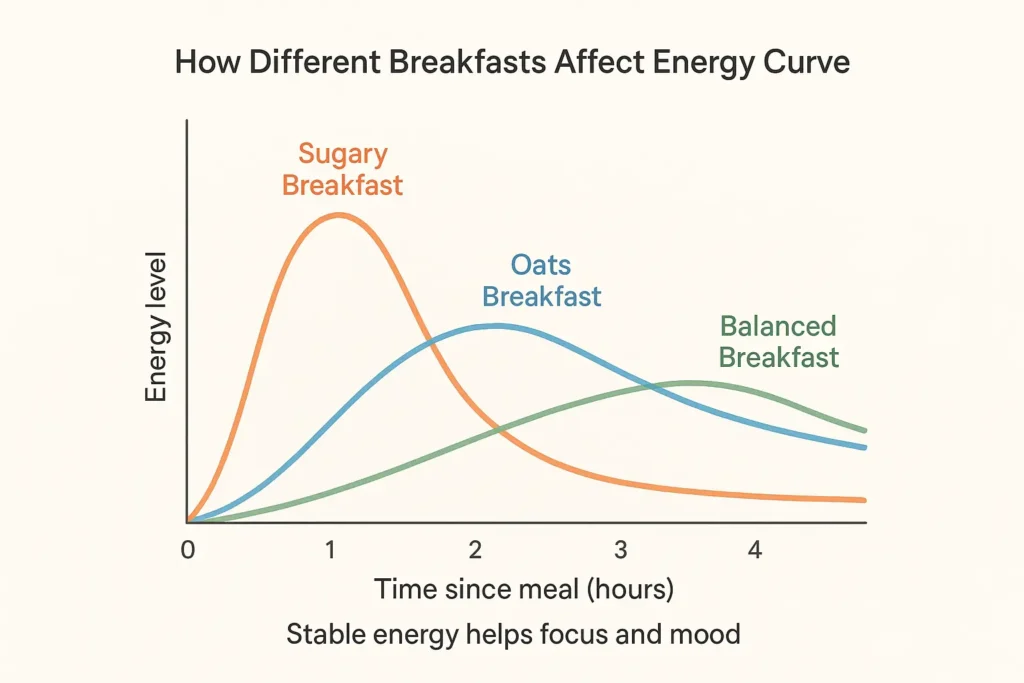
| Breakfast Type | Glucose Spike | Energy Duration | Focus Level (Average) |
| Sugary Cereal + Juice | Very High (20–30 min) | Short (≈1 hr) | Low (energy crash) |
| Oats + Milk + Berries | Moderate | 2-3 hrs | Moderate |
| Eggs + Whole Grain Toast | Low | 4–5 hours | High (steady, good focus) |
Small Shifts, Big Results
Believe it or not: Small shifts create big shifts in breakfast
You don’t have to completely ditch breakfasts you’re familiar or comfortable with. Just focus on:
- A variety of complex carbs + protein + healthy fat
- Say no to the sugar spike first thing.
- Turn breakfast from an instant fuel to a sustained fuel.
These are the tips commonly emphasized in food science groups in everyday food, parents discussions.When you do, you’re not only nourishing your family — you’re creating a day worth of focus, calmness or less chaos of energy.
3. Cooking and Chemistry — How Heat Changes Nutrients
Cooking alters molecules in food; one can be good or bad.
It sounds simple. But think, when you sauté something, steam it, roast it or boil it — you’re changing the food chemistry. Some changes can be beneficial (enhancing flavor, easier for digestion). Some changes can be bad (nutrient draining or increasing cooking).
For busy parents, knowing the “good” from the “bad: makes meals just that much easier specially when learning the food science in everyday food which parents can use right away.
Why it matters
When it comes to cooking kids veggies, the outcome isn’t just a texture change or a flavor change. Think nutrition change.
According to a review of cooking-method studies: boiling vegetables brought extreme drops (onc-rst) in Vitamin C and B-vitamins because they leached out into the water or broke down.
Is steaming or roasting better? In many cases, yes.
Cooking Method & Nutrient Retention
| Cooking Method | Nutrient Retention (Vitamin C & B) | Flavor Impact | Parent Tip |
| Boiling | ~50-60% retention in many veggies OUP Academic | Mild | Use leftover water for soups or sauces |
| Steaming | ~80-90% retention in many veggies Healthline+1 | Clean | Great for kids’ veggies — keep color & crunch |
| Roasting | ~70-80% retention (varies by veggie & time) Health and Me | Sweetens | Makes veggies kid-friendly — try carrot & sweet potato wedges |
Real-Parent Moment
“I didn’t know that microwaving spinach is actually better for keeping some nutrients than boiling. Mind blown.” — r/FoodScience comment.
The point is: what you do in the kitchen is more important than what someone says on a “organic” or “whole grain” label, which is exactly what food science for parents aims to teach in simple terms.
Practical Kitchen Tips
- Use less water: The more water you cook with (and throw away) likely means you’re throwing vitamins down the drain.
- Less time = more vitamins: Cooking time should be kept to the least amount of time your family can tolerate.
- More heat = bad choice: Don’t cook with high temperature for long time unless flavor needs it (like roasting).
- Don’t overdo texture: Over-cooking vegetables may mean less nutrition and less likelihood of adults or picky eaters consuming.
- Do include cooking medium: If you boil food and throw away the water, you are most likely throwing away nutrients. Try soup or use in sauce!
Cooking is more than a cooking recipe process. By moving from “just cook it”, to “cook it well with flavor and nutrition for your family” is what parents naturally begin applying when they understand food science principles without even realizing it.
- “Effect of different cooking methods on the content of vitamins and minerals of some vegetables and food” .
- “How Cooking Affects the Nutrient Content of Foods.”
- “Does Steaming Vegetables Remove Nutrients?”
4. The Hidden Chemistry of Kids’ Snacks
You reach for the snack bar with the label “whole grain” for your child. You tell yourself, “This is healthy.” Then you turn over the package to read the label, and you see an extensive list of sugars, fats, and additives.
That “whole grain bar”? It may have a lot of sugar, backed by a good marketing strategy which is a common trap discussed in food science for parents spaces.
Why Snacks for Kids Are Often Misleading
Many pre-packaged snacks for kids claims: “made with real fruit,” “no preservatives,” and “whole grain.” Very attractive slogans, indeed. However, when you open these snacks, their chemistry tells a different story.
- Added sugars creates spikes in glucose level quickly, and that is energy – quickly followed by a crash.
Salt and fat create deliciousness and help you consume greater quantities than you realize. - So when you mix sugar + salt + fat, you get a strong trio for appetite, but not always nutrition.
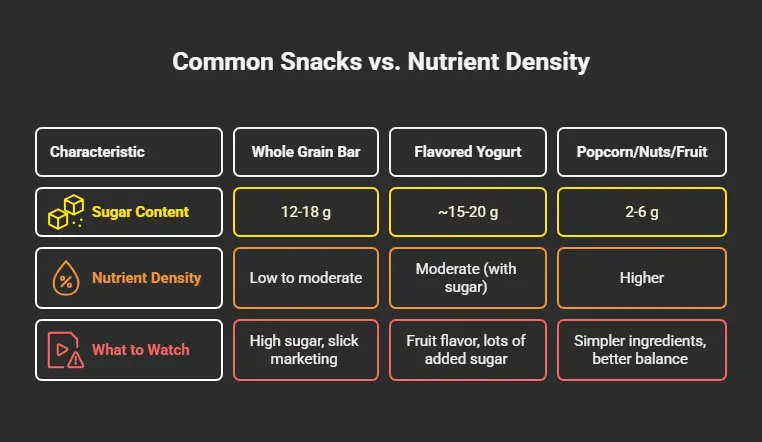
Common Snacks vs. Nutrient Density
| Snack Type | Typical Sugar Content | Nutrient Density | What to Watch |
| “Whole grain” snack bar | 12-18 g sugars | Low to moderate | High sugar + slick marketing |
| Flavored yogurt pouch | ~15-20 g sugars | Moderate (with sugar) | Fruit flavour + lots of added sugar |
| Plain popcorn / nuts + fruit | 2-6 g sugars | Higher | Much simpler ingredients, better balance |
- Based on an ARS report from the USDA, snacks account for roughly 42% of added sugar consumption among children and teenagers.
- According to the Center for Science in the Public Interest (CSPI), snack guidelines in schools allow for up to 15 g of added sugars for every 12 fl oz container in a high-school setting, when children should actually consume much less.
A redditor on r/FoodScience put it bluntly when they said, “I thought the pouch yogurt was healthy until I looked at the label. It was dessert dressed as yogurt.”
5. Practical Takeaways — Real Changes That Stick
“It’s not about eating perfectly – it’s about eating smart.”
Most parents don’t need to completely reimage their kitchen – just a few small swaps that actually stick. These tiny changes line up with what food science of everyday food for parents aim to make simple and doable.
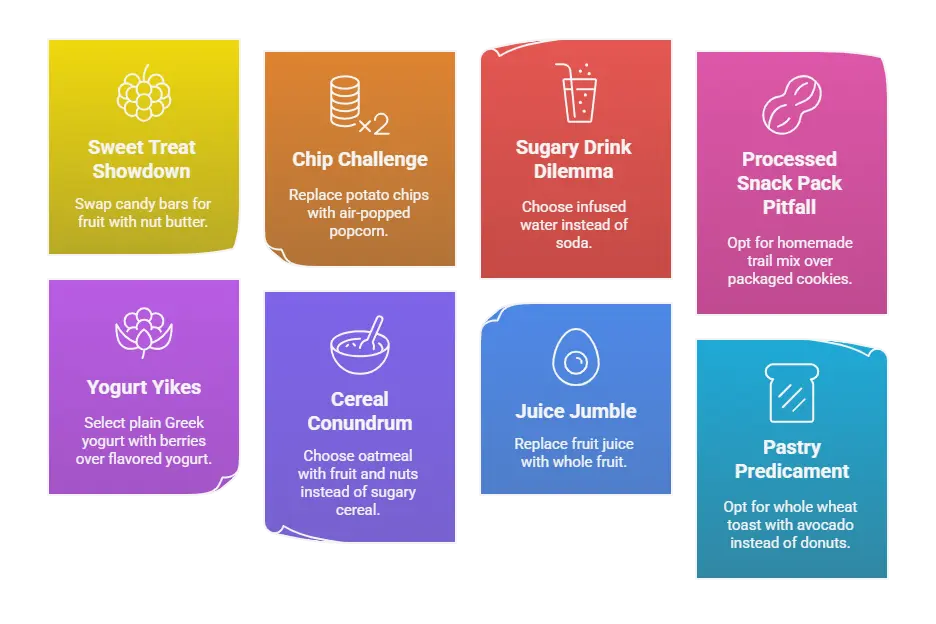
“Smart Swaps That Add Up”
These swaps are rooted in the same food science for parents you’ve learned throughout this guide.
💡 Fast-Action Tips (with Mini-Icons)
- ✅ Read one label a week — pay attention to the first 3 ingredients.
- 🌈 Half your plate = color —more veggies = more nutrients.
- ⏱️ Prep once, use twice — prepare extras, like rice or veggies, for tomorrow’s lunch.
Comparison Table — Food Choices and Their Real Impact
Let’s keep making food choices simple. In reality, you don’t need to throw out everything in your pantry – the goal is to make small, better swaps. These swaps work… because they promote stable energy, focus, and balance overall.
| 🕒 Meal | 🚫 Common Option | ✅ Better Swap | 🔬 Why It Works |
| Breakfast | 🥣 Cereal + Milk | 🍳 Eggs + Oats | Balanced glucose, longer focus. Low-glycemic breakfasts boost memory and attention by up to 20% (American Academy of Pediatrics, 2023) |
| Snack | 🍫 Granola Bar | 🍌 Banana + Almonds | More fiber, less sugar. Most bars contain 2–3 tsp of added sugar per bar (USDA FoodData Central, 2024) |
| Dinner | 🍗 Fried Chicken | 🍽️ Baked / Grilled Chicken | Lower oil oxidation. Baking or grilling reduces harmful oxidized fats by 40–70% vs. frying (NIH, 2023) |
💬 Quick Takeaway
Small adjustments lead to a large impact. Choose one swap to try this week. Once that adjustment feels like second nature, swap out something else. These small improvements eventually turn into sustainable healthy habits.
6. Everyday Biohacks That Actually Work With Families
You might have seen biohacking pop up in social media – ice baths, supplements, tracking apps.
Sounds intense, right?
However, biohacking doesn’t necessarily mean you live the life of a Silicon Valley experiment. It’s simply the idea of using small, evidence-based habits to help make your body work better – and you can absolutely do it while raising children.
Let’s make it practical.
1. The 10-minute morning light rule
Your body does not need caffeine right away in the morning.
Your body needs light.
Getting outside natural light within 30 minutes or 60 mins of your first awakening helps reset your circadian clock – your body’s natural clock for energy, concentration and sleep.
Even these small changes connect back to food science for parents, because energy, mood, and appetite are all chemistry-driven.
Research also found that just 10 minutes of sunlight will tell your brain to begin producing serotonin and cortisol, in healthy ways, to keep you alert without crashing .
If you’re packing lunches, simply open the blinds, or step outside with coffee, for 10 minutes – no biohacking gadgets needed.
2. The 3-3-3 breathing reset
During a day that feels like chaos – email, spills and the odd toddler tantrum – your nervous system puts you into a fight-or-flight mode. Whether the fight-or-flight is helpful or harmful, a swift breathwork practice can quickly bring you back.
Try this:
- Inhale for 3 seconds.
- Hold for 3 seconds.
- Exhale for 3 seconds.
Repeat 3 times.
That’s only 27 seconds – shorter than reading through one message thread.
Research confirms that brief breathwork sessions can reduce heart rates and decrease cortisol by 20% or more.
Parents on Reddit’s r/Mommit forum have mentioned using this ‘trick’ when they are in between chores such as before pickup in the car, while the kids are waiting for dinner to cook. It’s free and fast, and it helps all of us show up with a little less chaos.
3. The timing trick for energy dips
A lot of parents report that they feel their worst energy slump around 2–3 p.m.
Try this small change:
Have a protein-based snack (yogurt, nuts, or eggs, for example), ideally between 10:30–11 a.m. instead of waiting for lunch.
Balanced snacks in the mid-morning can reduce fatigue compared to no snack by 25–30% in the afternoon.
This isn’t about dieting; it’s purely chemistry. You’re giving your blood sugar a gentle (and a healthy) wave-like response instead of that spike and crash roller-coaster.
4. The realistic sleep cue
Biohackers refer to “sleep optimization,” but for parents, we’re really just thinking of small wins. Try dimming all the lights in the house an hour before bedtime. That one cue tells your brain melatonin is coming soon.
A bright indoor lights can suppress melatonin production by more than 90% right before sleep.
So when your bedtime chaos comes in reaction, consider the light being like caffeine. Dim light is you saying, “hey buddy, we’re landing soon.”
Straightforward. Genuine. Realistic.
These biohacks do not add more stress or cost — they can be incorporated into the life you already have.
7. Science Made Simple for Real Life
Food science is not about being perfect. Its about knowing enough facts to make intelligent decisions, one meal at a time.
You don’t need fancy diets or endless rules; just need a few facts that you trust.
When you know how food works, everything will change, and you’ll see how naturally food science make parents fit into the choices they already make..
You will stop guessing, and you will start choosing.
This is the foundation of food science for parents and simple principles which you can actually use every day in your kitchen.
You will also notice how your kids stay calmer after a real breakfast; or how your energy sustains when you pair carbs with a protein.
How simple swaps — like baked over fried — just feel better.
That is the value and power of learning real science, simply put, albeit true — science in real life, every day.
It’s not a lecture, nor will it be. It is something you will know, trust, and then use it in your kitchen, breakfast/ lunch box, or grocery aisle.
Keep it simple. Make one change this week and notice how you feel.
That’s how you build trust in food — not from a label or calendar, but from your personal experience.
With just a little everyday food science for parents, you will start making choices that naturally feel better for your family.
✅ Quick Recap
Top 5 Takeaways from Parent FAQs:
- 🍗 Add protein — every meal, every day.
- 🥦 Mix fiber + color to avoid energy drops.
- 🍱 Batch once, eat two meals.
- 📶 Microwaves = Safe, efficient, nutrient-friendly.
- 🧃 Ditch sugary drinks first — easiest win.
Next read:
👉 Why your lunch makes you sleepy — and how to fix it naturally.
FAQs — Real Questions Parents Actually Ask
Parenting is indeed a full-time job — and parenting should not also feel like a full-time job.
1️⃣ Why do I feel sleepy after lunch?
Quick Tip: Add protein (chicken, lentils, eggs) + fiber (veggies, whole grains).
That “post-lunch crash” isn’t in your head — it’s your blood sugar (glucose) spiking and crashing.
- Meals with a lot of refined carbohydrates (like white rice, pasta, or bread) can cause glucose to quickly rise, and then quickly fall.
- The lunches that are high-carbohydrate, low-protein can make you more tired and alertness can reduce by 30% as compared to balanced meals.
- Quick Tip: Add protein (chicken, lentils, eggs) + fiber (veggies, whole grains).
2️⃣ Is microwaving food bad?
No- microwaving is one of the safest, nutrient-friendly ways to prepare food.
- Microwaving food retains more vitamins (especially vitamin C and the B vitamins) than boiling or frying because the food is cooked for a shorter time.
- The World Health Organization (WHO) states that microwave radiation is non-ionizing radiation, meaning it cannot cause food to be radioactive.
- Pro tip: Use glass containers that are microwave-safe and avoid plastic containers.
3️⃣ Do kids really need snacks?
The answer is yes — as long as you choose wisely.
The USDA recommends 1-2 healthy snacks a day in order for children to stay energized and focused.
- Ideal snacks: fruit + nuts, yogurt, cheese sticks, or vegetable with hummus.
- You do not want to encourage children to “graze” all day; snacking too frequently will dull hunger cues.
Parent tip: Create “mini-meals” with at least 2 types of food (for example: apple + nut butter).
4️⃣ How can I cook healthy meals when I’m short on time?
Think “batch, freeze, rotate.”
- Batch cook grains (rice/quinoa/pasta) and freeze individual portions.
- Think sheet-pan meals – 1 tray – practically no cleanup!.
- Keep pre-chopped frozen vegetables in your freezer – they are just as nutritious as fresh ( frozen produce retains almost 90% of nutrients).
The science logic is: consistent is better than complex – even a 10-minute prep meal is a step toward healthier habits.
5️⃣ What’s one simple change that helps the most?
Add protein to every meal.
This keeps your energy more stable, helps with cravings, and keeps metabolism high.
- Research suggests extra protein of around 15–20g (>30g if dairy) per meal enhances fullness and reduces overeating later in the day / night .
- Simple win examples: additional eggs at breakfast, yogurt at snack time, or beans with dinner.
Bonus: cut (liquid) calories (ie soda, juice, even coffee), and you will see results in days!
Food Science for Parents: 7 Proven Science-Backed Insights You Must Know Read More »